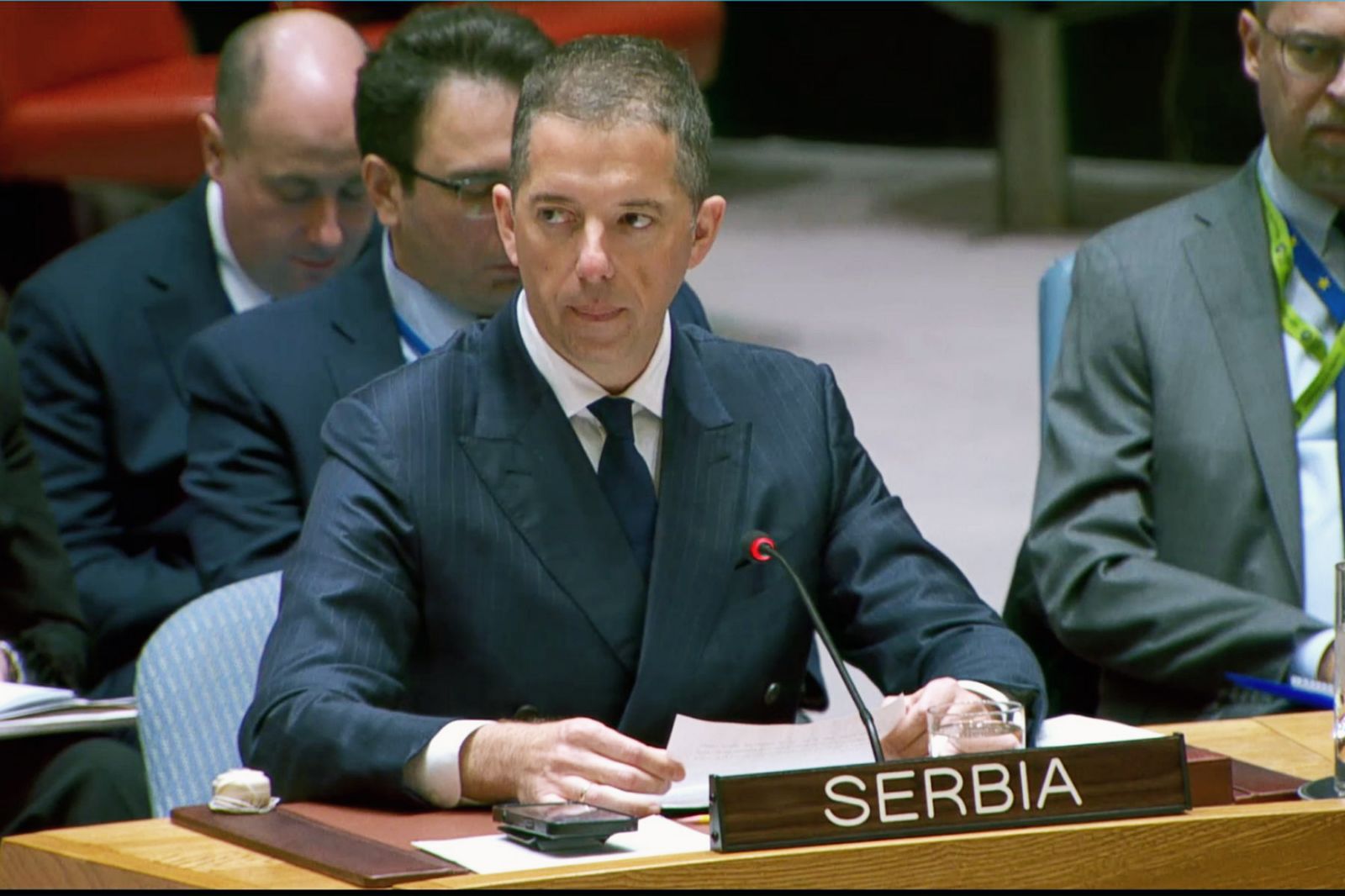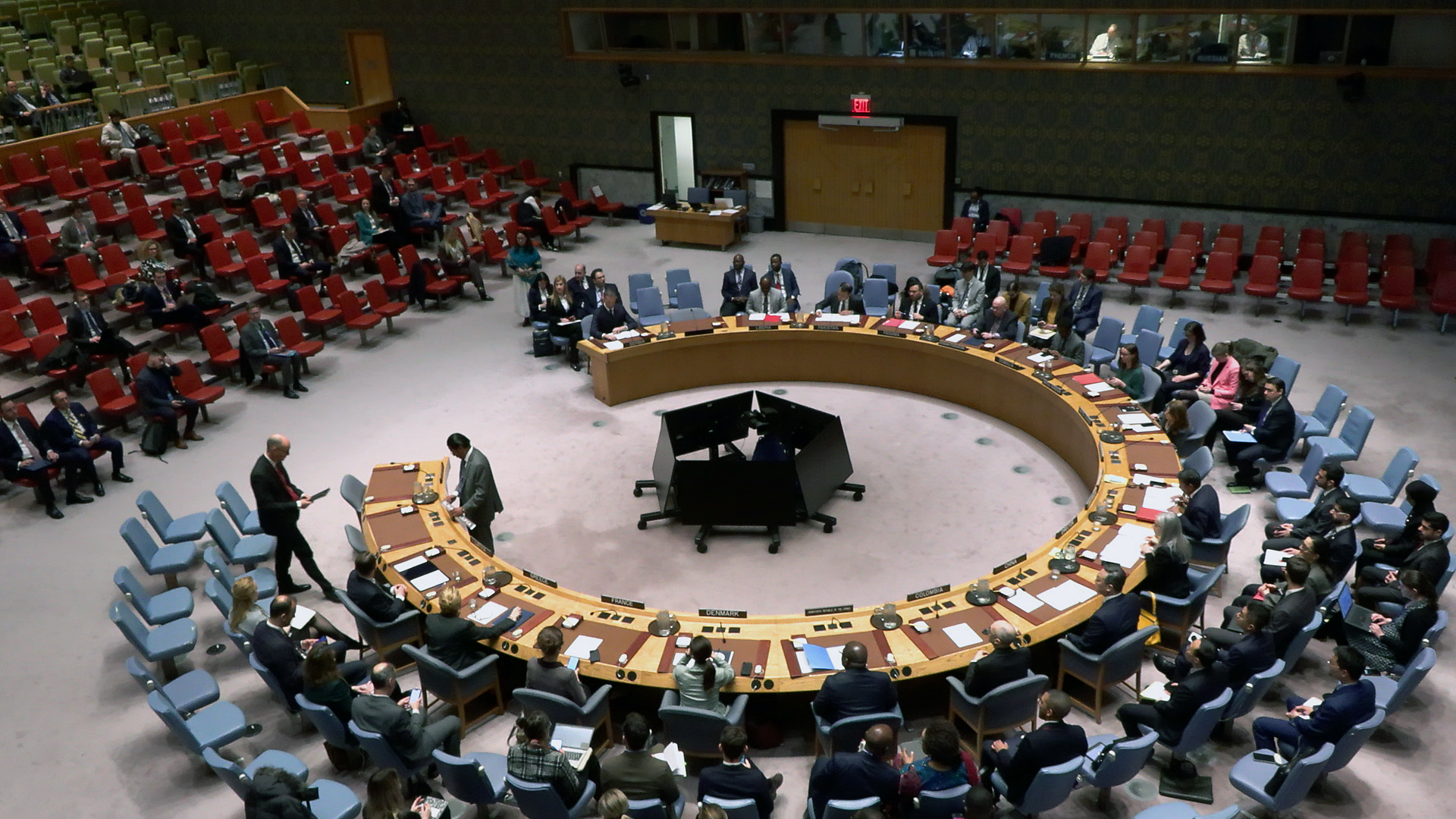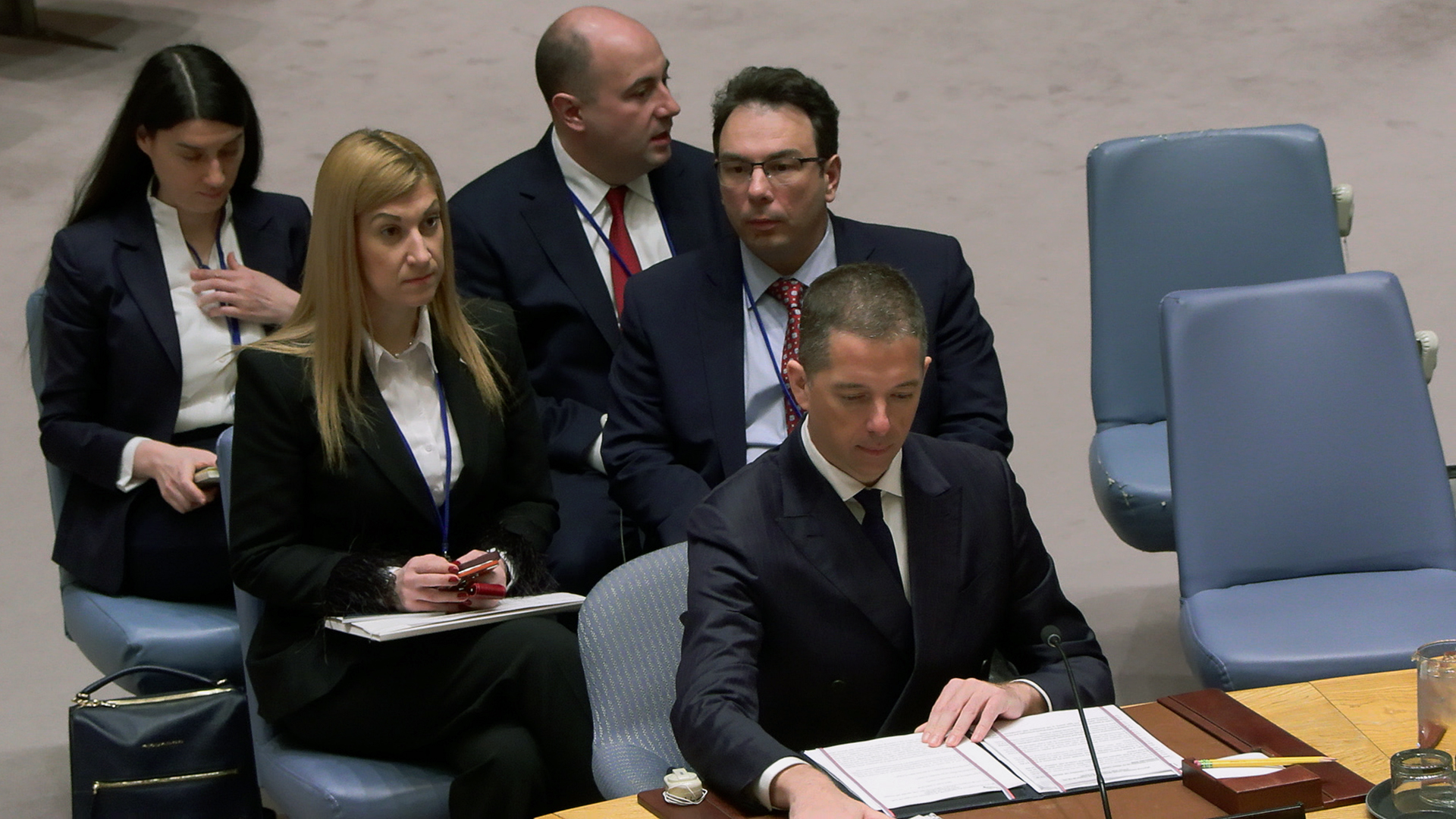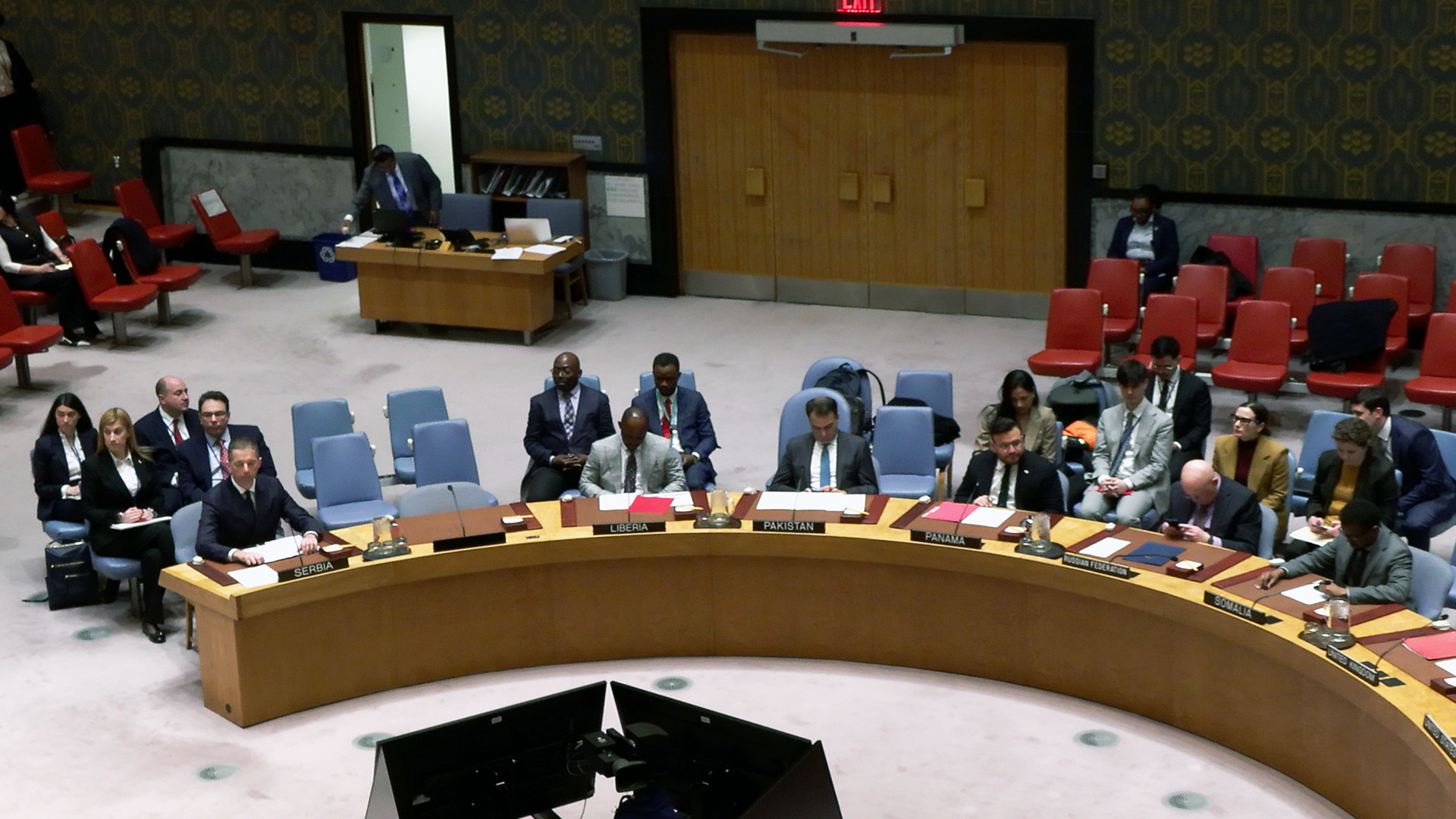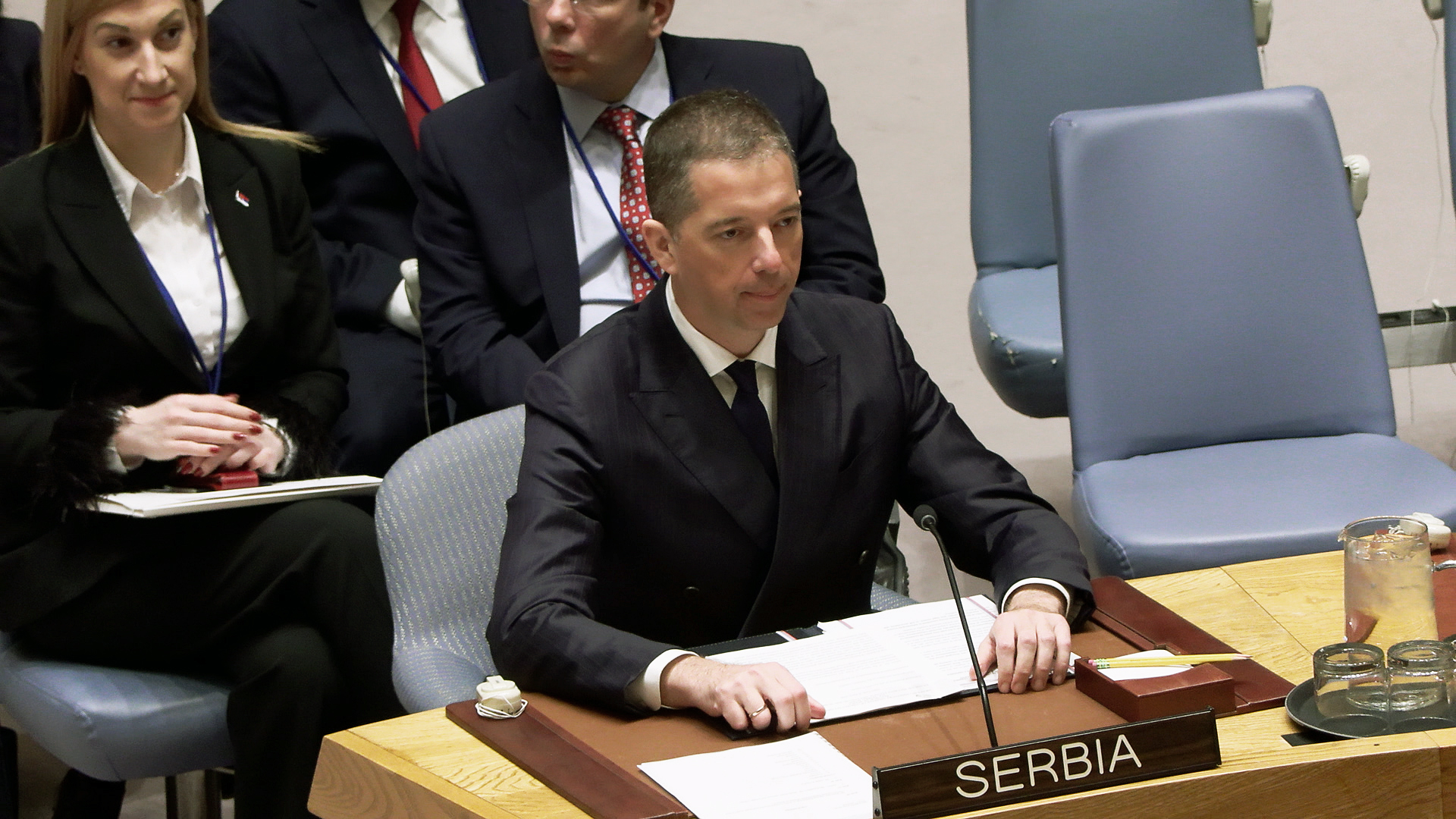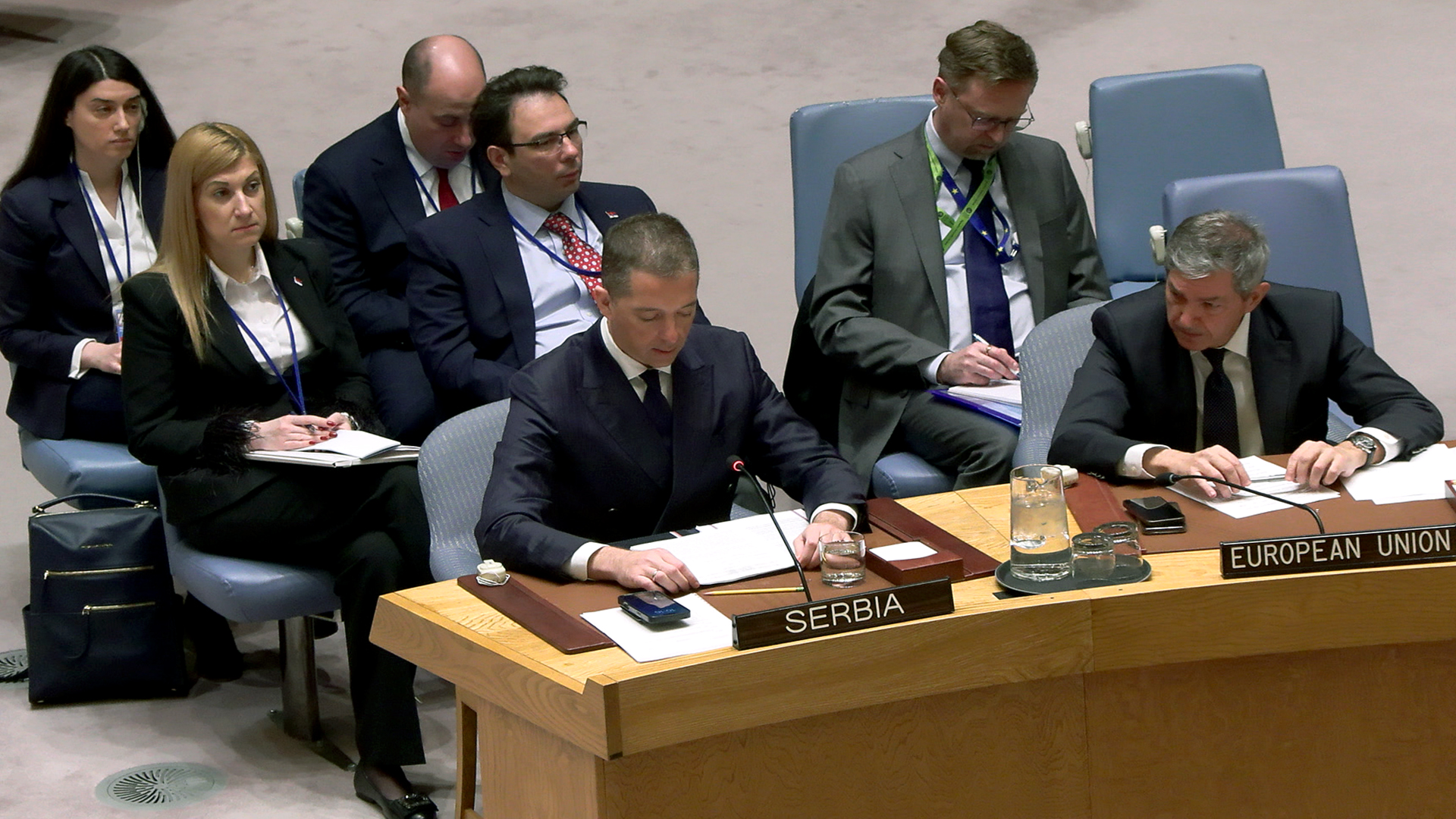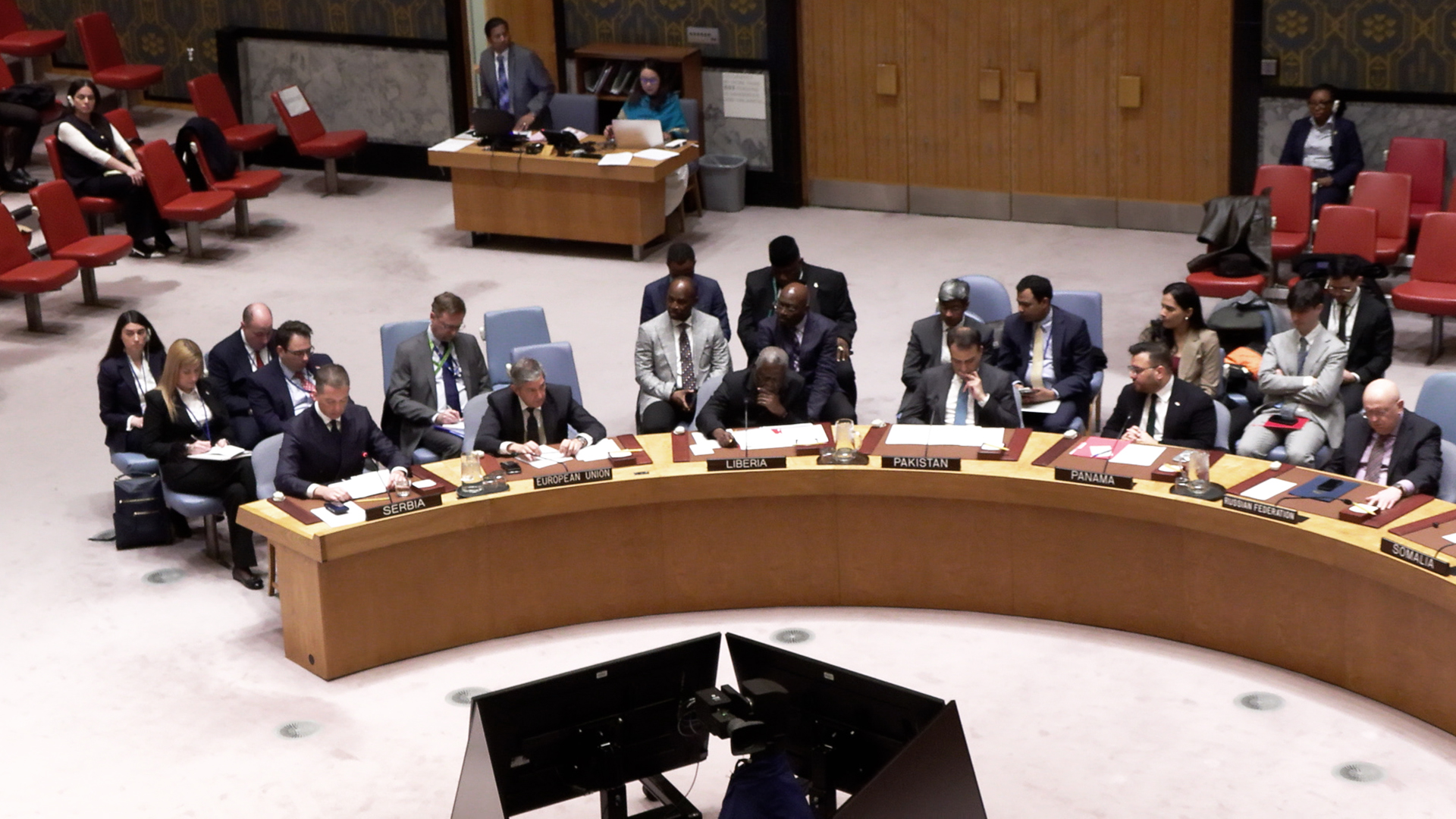

Address by the Minister of Foreign Affairs of the Republic of Serbia, Marko Đurić, at the United Nations Security Council session dedicated to the work of UNMIK
We transmit Minister Đurić’s address in full:
Mr. President of the Security Council,
Distinguished Members of the Security Council,
Mr. Special Representative of the Secretary-General,
Allow me first to express my gratitude to the Secretary-General of the United Nations, António Guterres, and to his Special Representative, Peter Due, for the report presented, as well as for their continued engagement in the implementation of UNMIK’s mandate, in accordance with United Nations Security Council Resolution 1244.
The Republic of Serbia extends particular appreciation to all members of the Mission. The presence of UNMIK continues to represent a key guarantee of peace, stability, and the protection of the fundamental human rights of Serbs in Kosovo and Metohija. At a time when calls are being made to reduce UNMIK’s budget and alter its mandate, the Republic of Serbia sends a clear and unequivocal message: the presence and role of this Mission must not be weakened but rather strengthened. Allow me to be absolutely clear. Under the present circumstances, UNMIK is not merely relevant; it is indispensable. Its mandate, grounded in Resolution 1244, has not been fully implemented. This is not a technical matter. It is a matter that directly affects the security, rights, and daily lives of people on the ground. The Republic of Serbia remains firmly committed to supporting such a role.
Any discussion of its future must be guided strictly by realities on the ground, rather than by assumptions that may not correspond to the lived experience of communities.
At a time of growing global uncertainty and multiple crises in different regions, it is especially important that the Security Council remain anchored in facts, law, and a clear understanding of developments on the ground. In that context, UNMIK continues to play a stabilizing role, not only through its reporting, but also through its very presence. Its mandate under Resolution 1244 remains essential for ensuring impartial oversight, particularly because unilateral actions risk undermining the fragile balance achieved over the years.
Distinguished Members of the Security Council,
Today I address you not only as a representative of the Republic of Serbia, but also as the voice of those who live every day in fear, insecurity, and under constant pressure in Kosovo and Metohija. The oppression of a community does not occur overnight. It unfolds in recognizable stages. And those stages are, regrettably, clearly discernible in the position of Serbs in Kosovo and Metohija today.
I stand before you today not to prevail in a debate, but to contribute to solving a problem.
And let me state this clearly from the outset: Serbia is not part of the problem; we are part of the solution. I also speak as the voice of those who feel intimidated — for the mothers and daughters of those who have been unjustly detained, for those who are labeled, marginalized, and pressured simply because of who they are.
What we are witnessing is not a series of isolated events. It reflects a broader and deeply troubling pattern. And this is a matter of principle. In many respects, this pattern bears disturbing similarities to the dynamics that preceded serious conflicts in the past.
The circumstances are not identical, but the trajectory should not be ignored. When rights are gradually eroded, when pressure becomes normalized, instability does not appear suddenly — it is built step by step, decision by decision.
As Martin Luther King Jr. reminded us, “injustice anywhere is a threat to justice everywhere.”
Therefore, what we are discussing today is not merely a regional issue. It is a matter that speaks directly to the credibility of international norms, the protection of human rights, and the responsibility we all share to prevent instability before it escalates. For decades, the international community has invested in building mechanisms to protect minorities and uphold the rule of law in post-conflict settings. Allowing these mechanisms to be bypassed sets a dangerous precedent far beyond the Western Balkans.
I. The first phase – Identity becomes a reason to live in fear
We are witnessing a reality in which identity itself has become a source of insecurity.
Under the policies pursued by Albin Kurti, Serbs in Kosovo and Metohija are increasingly being marked as “the others.” Their identity is being used as grounds for restricting the rights of Kosovo Serbs, limiting their freedom of movement, and targeting their homes, property, and religious sites. Arbitrary arrests, attacks, and administrative pressure are not isolated incidents.
They form a systematic pattern of marginalization that we cannot and must not ignore.
The United Nations were not created to remain silent in the face of injustice. Their role is to ensure respect for international law and to protect individuals and groups whose rights are denied. For precisely that reason, what is taking place today in Kosovo and Metohija is not merely a regional issue, but a matter of shared responsibility and a test of the credibility of the international order.
The facts are deeply troubling. In 2025 alone, 137 ethnically motivated incidents were recorded. Since the beginning of this year, new arrests and attacks have continued. These events do not point to coincidence, but to a pattern of pressure and a climate of impunity.
Serbs face restrictions on freedom of movement, arbitrary arrests, attacks on their property, and the desecration of religious sites. Attacks on the Serbian Orthodox Church strike at the very core of cultural and spiritual identity. Particularly troubling are attempts to enter social welfare, healthcare, and educational institutions, as they directly threaten the basic functions necessary for the survival of the community.
Restrictions on freedom of movement are systemic, not incidental. Mr. Milorad Arlov, a well-known humanitarian from Banja Luka, is only one of countless examples of individuals who have been denied entry to Kosovo and Metohija. Even the Patriarch of the Serbian Orthodox Church was prevented from visiting the seat of his Church. These are not merely administrative obstacles; they constitute deliberate signals that certain identities are unwelcome or subject to conditional approval.
This is not about procedure. This is about principle.
These actions send the message that rights are conditional, that identity determines access, and that even humanitarian work and religious duty may be obstructed. In 2025 alone, more than 130 ethnically motivated incidents were recorded. Since then, arrests, intimidation, and attacks have continued, while reports of physical assaults, property damage, and verbal harassment have persisted into 2026. We recall the shooting of Serbian boys in Štrpce on Orthodox Christmas — a deeply disturbing act that continues to resonate precisely because accountability remains unclear and insufficiently demonstrated. Such incidents undermine not only individual security, but also the collective sense of belonging of entire communities.
At the same time, a series of coordinated measures has affected the daily lives of Serbs:
The unilateral ban on the Serbian dinar, which disrupts basic economic life and pushes pensioners, families, and small businesses into uncertainty as they struggle to access funds or carry out everyday transactions. Many elderly citizens are now faced with long journeys to border areas merely to receive their pensions, turning what should be a routine matter into a source of hardship and humiliation.
Systematic pressure on Serbian institutions in healthcare, education, and social services, leaving patients without reliable care and students uncertain about the continuity of education in their mother tongue.
Arrests that raise serious concerns regarding due process and proportionality.
Expropriation of land in the north for mono-ethnic special police bases, often carried out without transparency and outside agreed frameworks.
These are not isolated decisions. They form a consistent pattern of pressure. To understand the full impact of these measures, one must consider how they affect daily life. Economic restrictions translate into uncertainty for families and obstacles for businesses. Parents worry about supporting their children; teachers and doctors see their professional futures placed at risk. Institutional pressure affects access to healthcare, education, and social protection. Legal insecurity creates fear and discourages the return of displaced persons.
For many, this is not a matter of politics, but whether they can live normal lives, raise their children, and remain in their homes. When the basic conditions for a dignified life are undermined, people leave — not by choice, but out of necessity. This gradual demographic change, driven by constant pressure rather than voluntary migration, threatens to fundamentally alter the multi-ethnic character of Kosovo and Metohija. And this does not affect only Serbs. The Gorani community is facing increasing marginalization. The Bosniak community is being pushed aside, amid growing concern over quiet assimilation. When several communities experience similar pressures, this becomes a structural issue that threatens the very foundations of coexistence.
And once again, this is a matter of principle.
Over the past six months, the situation has only deteriorated further. Instead of progress toward normalization, we are witnessing developments that deepen mistrust and intensify insecurity. This raises a fundamental question: what future can we expect in a society where people are targeted because of who they are, and where justice is absent? Without accountability, there can be no trust. Without trust, there can be no stability. And without stability, there can be no lasting peace. It is especially troubling that the report fails to mention the quiet yet persistent exodus of Serbs. In a noticeably short period, approximately 20 percent of the Serbian population has left Kosovo and Metohija as a result of pressure. This is not statistic. It is an exodus. And it is our shared responsibility to stop it.
II. The second phase is legal marginalization
The pressures we are witnessing today go beyond physical threats; they are being intensified through policies and administrative decisions. Legislative initiatives, such as the draft Law on Foreigners, have caused deep concern among Serbs in Kosovo and Metohija. There was a real risk that people who have lived and worked there for decades could be treated as foreigners, deprived of the right to residence, to work, and even to remain in their own homes. Such measures are not only legally questionable but also reflect a broader pattern of attempts to reshape reality through administrative means. At the same time, Serbs face growing legal and administrative obstacles that make everyday life more difficult, from access to public services to the exercise of basic rights. In such circumstances, it is essential that justice be administered in a manner that is consistent, impartial, and firmly grounded in the rule of law. However, we are witnessing numerous cases of arbitrary and legally questionable arrests of Serbs, often based on unreliable testimony relating to alleged war crimes. In such proceedings, not only is the legal basis often doubtful, but the fundamental rights of detainees are also seriously undermined. Rather than contributing to justice and reconciliation, such practices create fear, obstruct the return of displaced persons, and erode legal certainty.
Previously reached agreements are not being respected. More than thirteen years have passed since the signing of the First Brussels Agreement, and it still has not been implemented. A key obligation undertaken by Priština has not come close to fulfillment. The establishment of the Association/Community of Serb-majority Municipalities has been delayed for nearly a decade and a half. This is not merely a matter of time, but one of credibility, trust, and respect for obligations that were formally undertaken. Without implementation of what has already been agreed, it is difficult to speak of genuine progress or sustainable normalization. In this way, Kosovo Serbs remain without the legal framework guaranteed to them through the Dialogue, thereby undermining both trust and the credibility of the process. This pattern is reinforced by institutional mechanisms.
There is also a deeper contradiction that must be addressed directly. Albin Kurti rose politically as a student activist, advocating for rights and resisting what he described as oppression. Yet today, many on the ground experience his policies as restrictive, exclusionary, and increasingly harsh. This transformation raises fundamental questions about consistency in the application of democratic values. Leadership carries responsibility toward all communities, not only toward political supporters. When that responsibility is exercised selectively, institutions weaken and divisions deepen. True leadership requires building bridges, not walls; it requires restraint and inclusiveness even when politically difficult. Instead of moving forward, we are witnessing leadership increasingly turning back to the past — reverting to patterns for whose transcendence this region has already paid a heavy price.
We are also witnessing a recurring pattern: a crisis is created. We all invest time, energy, and diplomatic efforts to contain it. And then, when it is only partially reversed, we are expected to welcome that as progress. This is not genuine de-escalation. It is a cycle that drains resources and erodes trust. This pattern has real consequences. It consumes diplomatic resources, undermines confidence, and prevents meaningful progress. Each new unilateral move creates uncertainty, disrupts daily life, and forces international actors into repeated crisis management instead of strategic support for normalization. And just yesterday, we saw yet another example. Albin Kurti visited northern Kosovo, once again bypassing and ignoring democratically elected Serbian representatives and mayors. This is not engagement. This is exclusion. At the same time, we must speak candidly about the EU-facilitated dialogue between Belgrade and Priština.
Serbia remains fully committed to this dialogue and to all of its obligations. But dialogue without implementation is not dialogue — it is stagnation. More than thirteen years after the Brussels Agreement, the Association/Community of Serb-majority Municipalities has still not been established. This is not delay. It is a refusal to implement agreed obligations that were meant to provide substantial self-governance and guarantees for the Serbian community in key areas such as education, healthcare, and local self-government. Without this Association/Community, the promised autonomy remains an unfulfilled promise, leaving Serbs without the institutional protection necessary for long-term security and prosperity.
We must also recall the Washington Agreement of 2020, reached under the mediation of Donald Trump. That approach was visionary. It placed economic cooperation at the center, offering a pragmatic path forward. Instead of confrontation, it offered connectivity. Instead of deadlock, it offered progress. That spirit should not be lost; reviving elements of economic integration, freedom of movement, and practical cooperation could unlock tangible benefits for all communities.
III. The third phase consists of attacks on culture, religion, and heritage
In addition to the difficult security and living conditions, the Republic of Serbia must also express particular concern over the continuous targeting of Serbian cultural and religious heritage. The desecration of religious sites and cemeteries is not merely vandalism, but a direct attack on identity, dignity, and fundamental human rights.
Allow me to draw your attention to just one of many incidents: the stoning of a bus carrying Serbian Orthodox pilgrims in South Kosovska Mitrovica in September 2025. This was not a random act. It was a targeted attack on individuals exercising their fundamental right to freedom of religion. When such incidents are not adequately reflected, we risk losing a full and accurate understanding of the situation on the ground. The preservation of Christian heritage in Kosovo and Metohija must be an absolute priority for all. The continuing targeting of cultural and religious heritage remains deeply troubling.
This is not vandalism — it is an attempt to erase identity and continuity. When churches are attacked, when cemeteries are desecrated when pilgrims are targeted, coexistence itself is undermined. Recent incidents, including break-ins at churches and desecration of graves, add to a long pattern of more than 150 Serbian Orthodox sites having been damaged or destroyed since 1999. Heritage is not only about the past — it is also about the future presence of communities.
Its protection is essential for building trust and reconciliation.
IV. The fourth phase entails increasing security pressure and intimidation
We are witnessing an accelerated process of militarization in Kosovo and Metohija. The strengthening of the so-called Kosovo Security Forces, accompanied by the acquisition of modern weaponry, cannot be viewed as a neutral process. It alters the security balance and increases uncertainty and the risk of escalation. Such developments, particularly when carried out without transparency and without full respect for international obligations, undermine efforts to maintain stability and call into question the credibility of existing security mechanisms. Let me therefore be clear: KFOR must remain the only legitimate and credible security presence on the ground, fully in line with its mandate. At a time of growing global uncertainty and transformation of the international order, the fragile stability in Kosovo and Metohija must not be put at risk. Under such circumstances, only KFOR can guarantee security on the ground.
Combined with non-transparent cooperation with certain actors in the region, these developments give rise to sincere concern. They threaten to undermine existing arrangements, including the Kumanovo Military-Technical Agreement. This directly affects stability on the ground.
In this context, KFOR’s role as the primary and credible guarantor of security for all communities remains essential. Any discussion about reducing its presence or capacities must be approached with the utmost caution, as premature changes could destabilize the fragile balance and embolden those who seek to alter facts on the ground through force or pressure.
Ladies and Gentlemen,
All of these phases clearly illustrate the pattern of actions being carried out by Albin Kurti. We are witnessing an approach that is applied deliberately, in which crises are not accidental, but created. Red lines are continuously moved further by fueling tensions and provoking situations on the ground. And then those same crises are only partially de-escalated, just enough to create the appearance of restraint. But let us be clear: red lines are never returned to their original position. They are only pulled back a few steps, while the new reality remains altered. And in that process, we are expected to welcome such moves as progress. This is not de-escalation. This is a method. By continuously shifting these red lines, pressure on Serbs in Kosovo and Metohija is intensified. The space for their normal life is constantly reduced, their rights are gradually eroded, and their very existence is brought to the edge. Such a policy creates conditions in which not only the Serbs, but also the Christian cultural and spiritual heritage in Kosovo and Metohija, and their survival, are placed in serious danger. Therefore, we must not view these developments in isolation. They form a consistent pattern, which requires a clear and principled joint response.
How do we break this cycle?
First and foremost, by reaffirming the significant role of the United Nations. For the Republic of Serbia, the United Nations remain the most relevant forum for ensuring justice and international order. We need more, not less, engagement of the United Nations. And we need full respect for binding decisions, including United Nations Security Council Resolution 1244. This resolution is not merely a document, but one of the most important legal frameworks for resolving the issue of Kosovo and Metohija. Its provisions must be implemented and not merely invoked.
It guarantees security for all and the right of return. Yet today, return is not only difficult, but also practically unsustainable. Of more than 230,000 displaced Serbs, only a negligible number have returned. People do not return to insecurity. They do not return to fear.
Second, we must look to the future.
We must overcome outdated divisions and focus on opportunities for cooperation. Serbs and Albanians are not destined to remain in conflict; they are peoples who must find ways to work together. There is room, particularly in economic cooperation, to build trust and create a shared future. A future in which our region moves closer to the European Union, becomes part of the common market, and provides our peoples with stability, opportunities, and dignity.
Distinguished Members of the Security Council,
Let us also consider the broader implications. Stability in Kosovo and Metohija is intricately connected with stability in the wider Western Balkans and, consequently, with European security as a whole. Every unresolved tension has consequences beyond its immediate context, potentially affecting migration flows, economic cooperation, and the credibility of international institutions. In a world facing multiple conflicts, the Security Council has a duty to prevent the re-emergence of old lines of division in Europe.
What we are witnessing is not accidental. It is a pattern. And unless this pattern is addressed through the consistent application of law and agreements, stability will remain fragile.
But allow me to be equally clear: instead of insults and accusations, we extend a hand of cooperation to the Albanian people. We do not believe that our peoples are destined for conflict. We believe that, through dialogue, economic cooperation, and mutual respect, a different future is possible.
And once again: Serbia is not part of the problem – we are part of the solution. Serbia remains committed to dialogue. Serbia remains committed to peace. Serbia remains committed to international law and to the full implementation of all agreements reached.
The Republic of Serbia supports and will continue to support UNMIK and its role in ensuring accountability and objective reporting — but sustainable normalization must be built through implementation, dialogue, and trust. Serbia is ready to cooperate constructively with all partners in finding a comprehensive, mutually acceptable, and lasting solution that respects the rights and security of all communities.
And finally, let us be clear:
Without accountability, there is no justice.
Without justice, there is no trust.
And without trust, there is no lasting peace.
Thank you.
New York,
9 April 2026